The Highland Folk Museum was founded in 1935 and the current 80-acre site in Newtonmore was bought in 1980, with historic buildings and structures continually added to the site. In 2013 the museum object collection was moved into the new Am Fasgadh store. Two years later the whole collection of over 12,000 objects and 35 buildings gained the status of National Recognition. On the mile long site visitors can discover how Highland people lived, worked and dressed from the 1700s up to 1960s. The museum has an ongoing maintenance plan which includes woodland, grounds and buildings. Working with High Life Highland Countryside rangers and other partners the museum aims to develop and interpret the natural habitats within the museum site, in the wider context of the Cairngorms National Park (CNP).
High Life Highland (HLH) is a charity registered in Scotland, formed on the 1st October 2011 by The Highland Council to develop and promote opportunities in culture, learning, sport, leisure, health and wellbeing across nine services throughout the whole of the Highlands, for both residents and visitors. HLH operates three museums across the Highlands: North Coast Visitor Centre, Thurso, Inverness Museum & Art Gallery and the Highland Folk Museum.
Objectives of the project
The Highland Folk Museum has a reproduction curling pond and Curling Hut to represent the history of curling in the Highlands in general and Newtonmore in particular. Our pond is not natural and was fed from a borehole until 8 years ago. A lack of water and some particularly dry summers have led to the pond drying up almost completely in the summer and a lush growth of soft rush and grasses has taken over.
We are keen to re-instate our Curling Pond as a freshwater habitat, with the added possibility of using it for curling in the winter if the weather allows.
The pond sits well in the surrounding area and would provide a stepping-stone from the natural loch at Loch Imrich and our own Sawmill Pond close by, at the west end of the museum site. The River Spey runs along our boundary and within a few hundred meters of both ponds. Both Loch Imrich and our Sawmill Pond support a range of native plants, insects, wild fowl, amphibians and invertebrates.
The storm damage of 2022 has resulted in the loss of many pine trees, but this has allowed for the natural regeneration of native species such as birch, rowan and hazel. We have planted additional hawthorn, blackthorn, rowan, hazel, crab-apple, oak, birch, dogwood, grey willow and holly, which will allow a very different woodland habitat to flourish now, which will in turn influence the nature of the freshwater habitat.
We have a variety of education and experience building opportunities arising from this project which can raise awareness of the issues facing land and freshwater habitats and empower people to take action themselves.
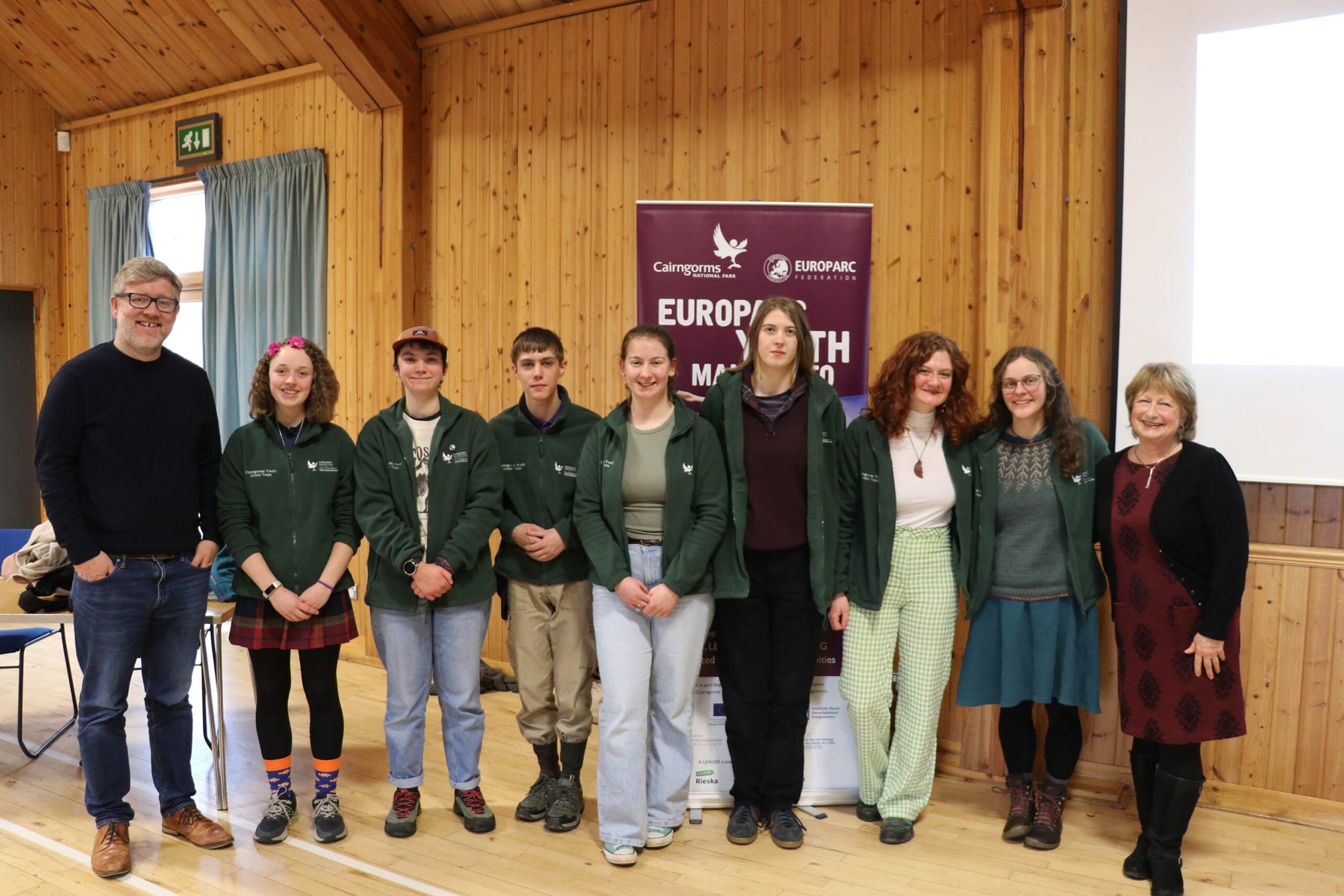
In partnership with our HLH Countryside Rangers, we have held two very successful sessions, part of the CNP Junior Ranger Monthly programme, surveying the current area for plants and wildlife. We were lucky to have the BBC Landward team film our March event, which aired on the 25th April 2024.

BBC Landward filming crew – Junior Ranger Event 24th March
-

- Pond dipping in the Curling Pond
-

- Comparison with habitat in the Sawmill Pond
We have engaged with museum visitors through interpretation and marketing using social media on the project so far. People can already see a huge improvement now that the area has been cleared. Thanks to the skill of the digger operator Simon Leslie, we have managed to save the original liner – great news from a cost and sustainability point of view. We are hoping to divert some of this saved funding to a dipping platform, enabling us to offer mini-beast and pond dipping sessions in future. Part of our future engagement will include an interpretation panel showing the range of freshwater creatures expected to be found in our new pond.
The remaining cost of the funding for our project was achieved by our Ranger Service from The Highland Council’s Nature Restoration Fund. As part of their Puddles to Ponds project, they have worked with many schools and community groups across the Highlands, installing small ponds and running a drawing competition for school children. The winning entries will be included on our interpretation panel, which will be placed beside the Curling Pond.
We have been very lucky to have such a wealth of knowledge and experience amongst the HLH and CNP Rangers, both for running the Junior Ranger sessions, and for identifying the flora and fauna in and around our pond.
An unforeseen benefit has been meeting and working with the Junior Rangers themselves. Such an enthusiastic and knowledgeable group of young people are a credit to the Cairngorms National Park and inspire hope for the future success of our natural habitats. They also built a bug hotel for us as part of one of their sessions.

Cairngorm Junior Rangers bug hotel creation at the Highland Folk Museum
The curling pond is an important part of the visitor experience as well as being a valuable fresh-water habitat. The Aviemore and Glenmore Community Trust are interested in creating a Curling Heritage Trail throughout Badenoch and Strathspey, in which we plan to be a partner along with the Scottish Curling Trust. The Curling Trail will be a project which will now take place either later this year, or next year, celebrating the importance of curling and its heritage while promoting modern curling facilities to visitors and locals within the National Park.
Any challenges or obstacles to the project and how were these over come
We had planned to work with the local Newtonmore Primary School, both in installing their own pond and in delivering pond dipping sessions. Kingussie Primary School were also interested in setting up a pond and a wider wildlife area but this has now be postponed until the next academic year.
We hoped to offer opportunities to Kingussie High School, either as part of their Junior Ranger Discovery week for S2 students or independently – again to run workshops which fit with their Science and Geography curriculum.
The project would also have provided an opportunity to offer experience and training in managing such a project to Kingussie High School students looking to build a career in Ecology and Nature Management. However this proved not feasible within the demands of the curriculum and staff time.
We had intended to work with Plantlife Scotland for a site survey and advice on creating habitats but understand that their funding to maintain a presence in the Cairngorms National Park was not renewed.
Impact of the fund/what has been the outcome
We are currently about halfway through the project, which finishes in October 2024. To date we have upgraded the electrical supply, water pipes and borehole pump in preparation for filling the pond.
-

- Electrical enclosure for borehole pump
-

- Borehole electrical and water pipe connection.
-

- Partial installation of water pipe from borehole to Curling Pond
We have completed the plant works, clearing out the silt and vegetation without damaging the existing liner.
-

- Simon Leslie Plant Ltd doing a sterling job of clearing the pond
-

- Completed Curling Pond clearance
We have purchased the oak from Logie Timber to create a new sluice gate. We have also held two great sessions with the Cairngorm Junior Rangers, who have helped deliver a baseline, not only for freshwater species in our two ponds but also for our regeneration of trees and shrubs within the pinewoods. This will influence our plans for future planting of the area following the destruction of Storms Arwen and Corrie in 2021/22.
We have received the entries for the drawing competition and will be working with our in-house Green Folk group (staff group addressing sustainability and other green issues) to score and appoint the winners.
We are looking forward to filling the pond and monitoring the area as it is repopulated with wildlife and plants.
Discover more about the Highland Folk Museum by visiting their website
www.highlifehighland.com/highlandfolkmuseum/