Project Overview
The Royal Zoological Society of Scotland (RZSS) is a leading wildlife conservation charity that manages Edinburgh Zoo and Highland Wildlife Park. RZSS is dedicated to reversing biodiversity loss, fostering connections between people and nature, and empowering communities to protect wildlife. Their strategy focuses on three key goals by 2030:
- Reversing the decline of at least 50 species.
- Engaging more than one million people in deeper connections with nature.
- Supporting over 100 communities in protecting local biodiversity.
The RZSS leads 23 conservation projects across Scotland and internationally, with a focus on species reintroductions, genetics, and veterinary conservation. Their conservation efforts engage more than 43,000 members, 750,000 annual visitors, and over 25,000 learners. In 2024, they expanded their outreach by opening a Wildlife Discovery Centre and an Education Centre at Highland Wildlife Park.
One of their recent initiatives, funded by the Cairngorms Trust Nature Resilience Fund, aimed to conserve a little-known but vital species: the blood-red longhorn beetle. This pilot project had two main components: a large-scale survey of the beetle’s population and a breeding programme to help reintroduce the species to the wild.
-

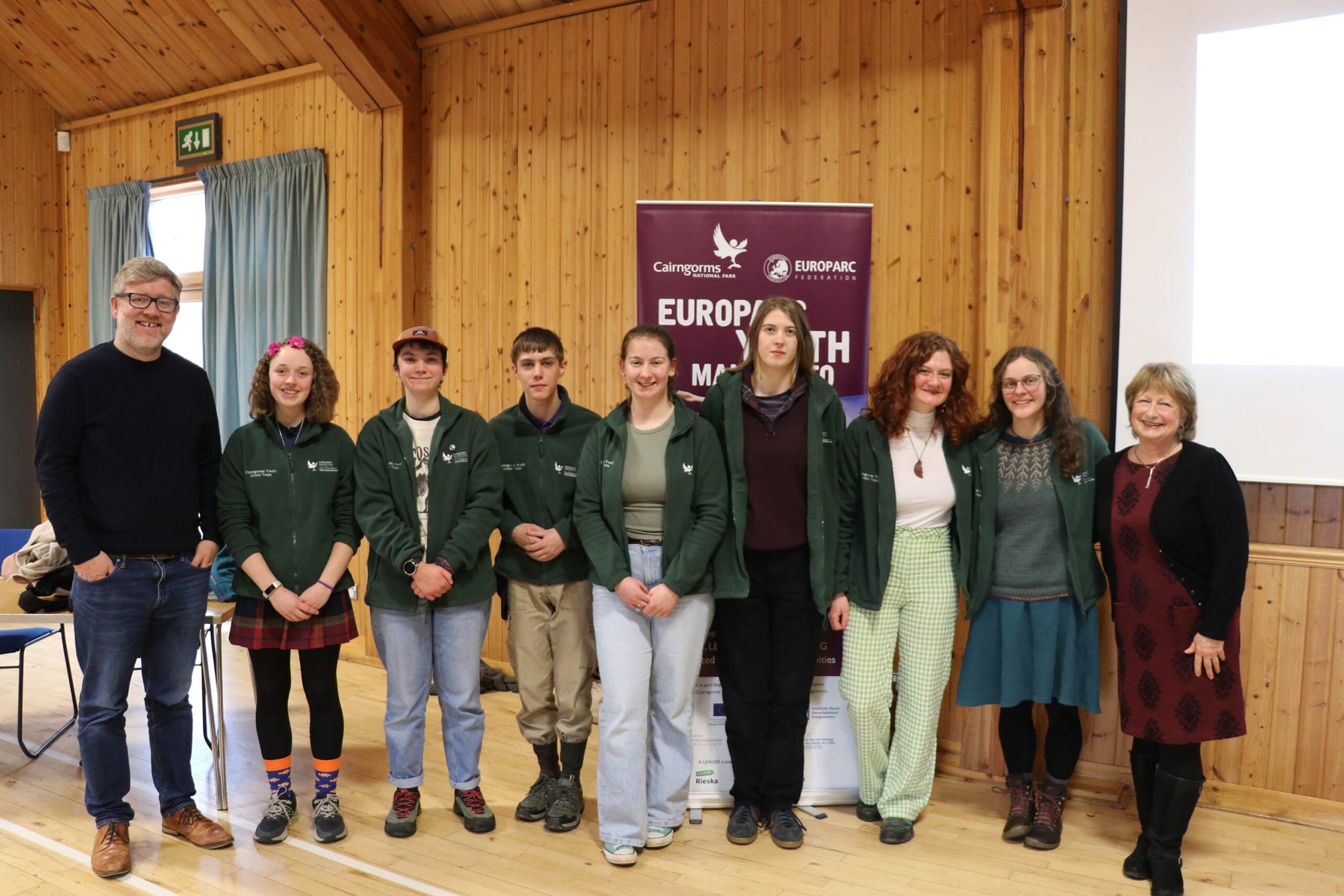
- Community volunteer training day at RZSS Highland Wildlife Park
-

- Blood red longhorn beetles mating in the RZSS Highland Wildlife Park breeding facility
-
- Blood red longhorn beetle in the wild showing paint marking for individual identification
Project Objectives The project aimed to:
- Conduct a large-scale survey to determine the distribution of blood-red longhorn beetles within Cairngorms National Park.
- Establish a pilot conservation breeding programme for the species at Highland Wildlife Park.
- Identify suitable release sites for beetles produced via the breeding programme.
- Create larval habitats at release sites by managing dead pinewood in sun-exposed areas.
- Raise public awareness about the importance of beetles, their role as pollinators, and the significance of old-growth Caledonian pine forests.
- Train citizen scientists to help monitor the beetle population, contributing to ongoing research.
Challenges and Solutions The project faced several challenges, particularly due to the limited existing data on blood-red longhorn beetles. Identifying appropriate survey areas required some trial and error. Furthermore, the initial timing of the surveys was misaligned with the beetles’ flight season, necessitating an extension of the survey period. Despite these obstacles, volunteers were dedicated, and the extended efforts resulted in improved knowledge of the species.
Another challenge was the uncertainty around egg-laying in the breeding programme. While mating was observed among the beetles, egg-laying behaviours were not. This presented difficulties, as the eggs are laid inside dead pinewood and cannot be observed directly. RZSS plans to monitor the deadwood using a stethoscope to detect larvae activity and will keep the wood for up to two years to observe any future development.
Project Impact The project has made significant strides in understanding and conserving the blood-red longhorn beetle, thanks to the support of the Cairngorms Trust.
Key Results:
- Citizen Science Survey:
- 15 local volunteers were trained to survey for blood-red longhorn beetles.
- 25 survey squares (1 km² each) were monitored.
- Beetles were detected in 11 squares, with a total of 160 individuals recorded—more than all prior records combined.
- The beetles were observed on various flowers, providing new insights into their habitat needs.
- Breeding Programme:
- 11 pairs of beetles were collected and brought to the Highland Wildlife Park for breeding.
- All seven pairs retained for the full breeding season successfully mated.
- Results of egg-laying and larval development are pending further monitoring.
The RZSS pilot project for the conservation of the blood-red longhorn beetle has been a success, creating a foundation for larger conservation efforts. The project’s results highlight the importance of citizen science and community engagement in achieving conservation goals.
For more information, visit RZSS Conservation.